Why We Remember

The Battle of Passchendaele

Tyne Cot WW1 Cemetery (ii), near Passendale, Belgium – Sept 2003

Cemetery of Passendale

Passendale – Tyne Cot Cemetery

Pyrrhic Victory

Victoria Cross

Passchendaele(2008) Film written/directed by Paul Gross

Passchendaele: Canada’s Triumph and Tragedy on the Fields of Flanders (Hardcover)

Michael Dunne, New York Times, August 3, 1919

General Douglas Haig

Vimy Ridge

The Battle of Vimy Ridge

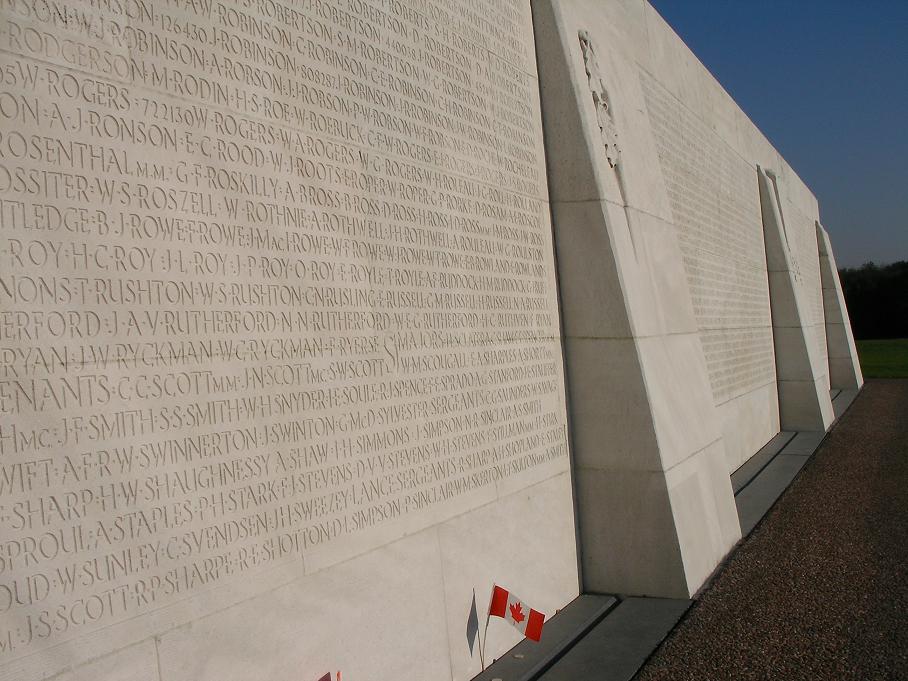
Canadian National Vimy Memorial

Pupils Produce Political Propaganda

How tough is it to create the slick political attack ads that flood the airwaves during an election?

Well, not so tough.

I stumbled onto a site that generates attack ads as fast as refrigerator magnetic poetry.

http://attackadgenerator.com/

I’m sure ten minutes is all you’ll need to create an ad that rivals any real attack ad.

Post a link to your “Attack Ad” here.
Attack Add Demo

Canadian Mysteries: Developing Critical Thinking

I was watching the game, but Tampa was up 4-0 on the Phillies so I started “surfing-the-net-on-my-laptop-on-the-couch” again.

I’m in search of a word or phrase that describes the often endless evening hours I spend, well “surfing-the-net-on-my-laptop-on-the-couch”. If “couch potato” was the 20th century term for spending too much time staring at the TV, there needs to be a term for someone like me who spends too much time on the couch staring at his laptop computer. I hoped the phrase “couch surfing” might fit. I googled it – nope … weird way to travel … but a term I can’t use. “Laptop Potato” is more of person who watches TV on a laptop. However, I usually have the TV on while I am “surfing-the-net-on-my-laptop-on-the-couch” so I’m not even watching TV the same as I used to. I used to be a “Mouse Potato” or “Computer Potato”, at my desktop iMac far enough away from the TV that it warranted a new term. But here I am again, “surfing-the-net-on-my-laptop-on-the-couch.”

“Blog potato” seems close, except I spend more time “working” on the blog server than actually writing a blog.

Maybe I’m more like a “video game junkie“. I can admit I will play video games, XBox 360, Nintendo GBA and I have an Atari 2600 in a box in the garage. However, any laptop I’ve had, I’ve used primarily for work – lesson design, organizing, grades, handouts, tests, and more recently maintaining web sites, blogs, forums. Hardly a “laptop junkie.”

Help me find a term to describe the common pastime of “surfing-the-net-on-my-laptop-on-the-couch.”

Oh, I saw a headline for an article that suggested that the more older people use the internet, the better their memory becomes. I wish I could remember where I saw it, though.

Finally, I wanted to share a site: Great Unsolved Mysteries in Canadian History.
CanadianMysteries.swf

Time to shut down and watch Sportsnet. Oilers lost. Good opening to the season, so far. They’ll still be in a battle to make the play-offs in the spring, though. Riders play Esks Saturday. When the Riders play, I can’t concentrate enough to attempt “surfing-the-net-on-my-laptop-on-the-couch.”

Go Riders.

“Is it bigger than a breadbox?”

Where are all those wooden nickels?I asked a student, “Is it bigger than a breadbox?” today. Their blank look reminded me that the older I get, the further removed I become from the popular lingo of my students. I have no desire to immerse myself fully in the vocabulary of my students, but I can leech unto them the background of some of my “Pingo Lingo.”

When I was a kid we would travel by station wagon, between Prince Albert and Saskatoon, and we would play “20 Questions“. We would each take turns thinking of something, and we would then each in turn ask questions until we where able to guess what the person was thinking. The first question was always, “Is it bigger than a breadbox?”

Writing Tips from the Lab

What I should do….

Bucky says, “Determining the factors that will be most powerful is on of the greatest pressures.”

Megan says, “Reread to find mistakes like writing you, it, and thing.”

Shustyn says,” Stop generalizing everything at the beginning of the post.”

Chetter says, “Make more debatable topic sentences.”

Sarah says, “ Quit writing (x=x) statement!”

Amie says, ” Write defiant opinions from within yourself. Tie into personal experiences.”

Myles says, “make sure your make contains more voice.”

Justin says, ” Avoid A vs. B in halves.”

Jordan says, “to start putting personal experiences.”

Conor says, “Make better thesis.”

Yarmz says, “Align picture” or “In the life there is a lot of decisions to be made.”

Kaitlyn, “I have been through an experience with cancer, one that I have learned from, knowing the consequences and fears it caused.”

Jacq says, ” I’ve been in my living room for countless hours working on this work of art.”

Brett G. says, “Start with an example of your own voice.”

Owen says, “he had afflicted lost of pain.”

Derek says, “The best way for the boy in the story stains to learn a life lesson.

Aubrey says, “Make your topic sentences.”

Tanner says, ” use your own voice.”

Nicole says, “I have long pondered over an invention that could make me famous.”

Chantal says, ” In my spare time I really enjoy reading stories and novels because they help me to leave doctor mode and just enjoy my spare time

What I need to stop doing…

Bucky says, “Emotion and feelings play.”

Chetter says,” Both John and Jonny attend a banquet.”

Tanner says, “there are any issues.”

Shustyn says, “possessing values is a key part in my life. My everyday decisions are based on my values.’

Megan says,” There are many pressures in the teenage life styles.”

Sarah says, ” There is a way” or “Somehow”

Justin says, ” What their beliefs are.”

Amie says, “The characters in the story.”

Myles says.” ThiS way we can make the right decisions.”

Curtis says, ” There are many similarities, along with many differences.”

Conor says, “There are always.”

Jordan says, “I think.”

Jacq says, “Being surrounded by the people who love them can help the person pull through the tough times.”

Kaitlyn says, “differing life views can affect the decisions made.”

Yarmz says, “stop putting elementary words, start using high school words. start to not put x=x.”

Owen says, “He has to learn from mistakes.”

Brett G says, “Avoid thing all time and places.”

Derek says, “Use words that are grade 10 appropriate.”

Aubrey says, “Don’t argue the obvious.”

Jason says, “stop writing good inconstantly.”

Nicole says, “almost always.”
Writing Tips

I found a scribbled, hastily assembled, crumpled piece of paper simply titled “Tips” in my desk today.

As far as I recall, it was the product of grading a set of essays a couple years ago on the novel Wild Geese by Martha Ostenso.

A common practice of mine after reading/marking a set of essays is to assemble a list of “pet peeves,” or writing errors, or tips that emerge from the set.

Here is the list:

  • practice writing a thesis/topic statement that can be parsed
  • the inclusion of a detail must support it’s purpose
  • structure, connect, state clearly, order, each subtopic as it develops the thesis
  • avoid “if…then” as logical proofs of what is
  • when discussing technique, consider the degree of complexity
  • avoid pronoun shifts: “you”
  • avoid plot summary
  • develop a Linking Lexicon
  • avoid dropped quotes
  • No X=X (see Rule 3 of 6):
    “These things…”, “There is nothing…”, “… shows us something important…”, “In this essay…”, “Many examples…”, “The quote…”, “In the book…”, “On page…”, “… the same thing…”, “I don’t think…”, “This is the end of my essay…”, “She was herself…”, “As a human…”, “… the way it did…”, “… start doing things…”, “… many times…”, “After reading…”, “I will be writing…”, “These symbols are the things…”, “… good with the bad…”, “It made things…”, “They did what he told them to do…”, “Her true feelings…”, “… an effective way…”, “… a secret way…”, “… the way…”, “… many ways…”, “… a different way…”, “… it speaks…”, “We, as readers…”, “… finished reading…”, “… the ideas of…”, “… something in the end.”

This invasion of one’s mind by ready-made phrases [X=X] can only be prevented if one is constantly on guard against them, and every such phrase anaesthetizes a portion of one’s brain. George Orwell

Novel Study Preflight Checklist

Read a Novel from the Reading List:

Tracback a “map” of your response here.

Suggestions for Approaching Poetry

  1. Assume that it will be necessary to read a poem more than once. Give yourself a chance to become familiar with what the poem has to offer. Like a peace of music, a poem becomes more pleasurable with each encounter.
  2. Do pay attention to the title; it will often provide a helpful context for the poem and serve as an introduction to it.
  3. As you read the poem for the first time, avoid becoming entangled in words or lines that you don’t understand. Instead give yourself a chance to take in the entire poem before attempting to resolve problems encountered along the way.
  4. On a second reading, identify any words or passages that you don’t understand. Look up words or passages that you don’t know; these might include names, places, historical and mythical references, or anything else that is unfamiliar to you.
  5. Read the poem aloud (or perhaps have a friend read it to you). You’ll probably discover that some puzzling passages suddenly fall into place when you hear them. You’ll find that nothing helps, though, if the poem is read in an artificial, exaggerated manner. Read in as natural a voice as possible, with slight pauses at line breaks. Silent reading is preferable to imposing a “te-tumpty-te-tum” reading of the poem.
  6. Read the punctuation. Poems use punctuation marks – in addition to the space on the page – as signals for readers. Be especially careful not to assume that the end of a line marks the end of a sentence, unless it is concluded by punctuation.
  7. Paraphrase the poem to determine whether you understand what happens in it. As you work through each line of the poem, a paraphrase will help you to see which words or passages need further attention.
  8. Try to get a sense of who is speaking and what the setting or situation is. Don’t assume that the speaker is the author; often it is a created character.
  9. Assume that each element in the poem has a purpose. Try to explain how the elements of the poem work together.
  10. Be generous. Be willing to entertain perspectives, values, experiences, and subjects that you might not agree with or approve.
  11. Try developing a coherent approach to the poem that helps you to shape a discussion of the text.
  12. Don’t expect to produce a definitive reading. Many poems do not resolve all the ideas, issues, or tensions in them, and so it is not always possible to drive their meaning into an absolute corner. Your reading will explore rather than define the poem. Poems are not trophies to be studied and mounted. They’re usually ore elusive. And don’t be afraid that a close reading will damage the poem. Poems aren’t hurt when we analyze them; instead, they come alive as we experience them and put into words what we discover through them.

Short Story Unit Plan

Given:
I have a variety of online etexts of classic short stories.
Each story is linked to a discussion forum of the author.
I have a Short Story Study Guide template. I figure this template will suffice for a multi-threaded response from a blog. Design a clear “map” for me to follow for assessment.
I have a list of Critical Questions(each topic linked to a discussion forum as well). Pick and choose whatever question you like to fill out your guide.
I have a page of Focus Questions for the entire course. Choose your overall thematic focus from this list.
I have a bank of exams for each of the short stories (view a sample quiz, oh, you’ll need the hint for the password).


Your Task:
First, work alone on any one story, all your work on one story should be in your own blog(dedicate one post as a “map”). 3 days. Quiz #1: November 14.
Second, work in pairs on another story, all your work must link collaboratively between your two blogs. 3 days. Quiz #2: November 19.
Finally, work alone or in pairs (or larger groups) on a third story, your response can be in an acceptable collaborative format. 3 days. Quiz#3: November 23.


Weight:
Quiz 20%, Study Guide 80%.(x3)

Consider:
A novel study and a variety of poems remain as requirements in the course. Diploma Part A: January 15, 2008. The Novel should be done before Christmas break to allow for poetry study in January. Consider extra readings from the reading list.

Trackback your 3 responses here.

Kimberley Klein Wins $10000 Scholarship

Congratulations Kimberley! The two runners up, Jess Kim and Shelley Batts, will each be awarded $1,000.
The remaining 7 finalists in the top 10 will be sent a $100 award for their participation. This includes:

  • Thomas Peters
  • Matthew Burden
  • Grant Brisbee
  • Paul Stamatiou
  • Shane Lavalette
  • Stephanie Collins
  • Karin Dalziel

Any surprises?

Kimberly Klein was a clear first place choice by many STJ bloggers.